
Considering the recent hick-up (see here or here) in McDonald’s attempt to create a social media campaign the new report “Future of Customer Service: The Rise of The Social Customer” might come handy.
1 Thought (was 10 Predictions) for 2012
 This originally started as 10 predictations for 2012, but while thinking about and refining it, these turned into one thought / prediction with several proof points.
The Rise of the User Experience – Design Thinking
2012 will be the year of design thinking. We will see products and services that provide a consistent end-to-end user experience dominate the market. It will be the products designed to be easy those that win over the complex ones.
Products will no longer mainly succeed on tech specification, but a lot on user experience. Marco Arment already made the point on his extension of the initial Amazon version of the Kindle Fire vs. iPad 2 comparison.
The major question will no longer be who owns the customer, but who owns – and manages and improves – the overall user experience, because this is where the competitive differentiation will happen. And user experience includes everything from starting to use / subscribing to – using – handling faults around products and services.
Telco operators will need to re-consider what their products and services are and design them around the end-to-end user experience paradigm. In the past this was simple because the services: voice calls, SMS, basic data services have been defined by standardization, which – besides the capacity and coverage issue – did take care (or not) about the simple user experience. When starting to look at new and different services like content, video, cloud storage the design of the user experience becomes more difficult and involves element outside the control of telco operators.
And so here are the remaining “predictions” or discussion points around this theme.
1) Smartphones and Tablets
The leading position of Apple’s iPhone and iPad in the smartphone and tablet market in terms of defining the standard for user experience and achieving the highest profitability will not be challenged soon, while Android will definitely lead in terms of market share.
Following the design thinking theme above, the major challenge for Android relates to the fragmentation of devices, device capabilities and screen size (see overview of screen sizes at Stephanie Rigger). This significantly complicates the design of a consistent user experience across a broad set of devices (design implications at Jeffrey Feldman)
One company taking Android to the next level is obviously Amazon with the Kindle (Fire). And while definitely not a competitor in the full tablet space, it is interesting to see them moving Android into a closed content (mainly books) delivery device with their own ecosystem. Creating the only Android-based tablet-like device with substantial sales numbers by owning the complete user experience.
The other element of increasing customer frustration around Android and the device fragmentation is the OS upgrade complexity and un-availability of OS upgrades to many devices. The latest take on this the Samsung Galaxy S, which is not getting a Android 4.0 IceCreamSandwich upgrade.
It will be interesting to see how the only other serious contestant in the space – Microsoft Windows Phone – is doing with the launch of Windows 8. At least from the presentation it looks as if there will be a very strong framework and guidelines on the user experience for the Metro GUI.
Even if some claim that it is too late, I believe that Microsoft and Nokia will see a strong start, if they jointly work on putting all the pieces of a strong user experience and ecosystem together. And yes, it will be Microsoft and Nokia together driving this; alone on their own each will fail.
Oh, and forget about WebOS and RIM in this space. Both lacking the momentum on designing and pushing a competing user experience paradigm into the market.
2) Clouds and Cloud Computing
Besides the current hype in clouds and cloud computing – which even made it to the daily newspapers – it is obvious that in the future for mobile applications a cloud-based backend infrastructure one way or another will be essential, not only for data back-up, but also as the core element for syncing among several (mainly mobile) devices. Any application missing this component will have a severe competitive disadvantage.
The cloud infrastructure, including the APIs to integrate it into applications will be of equivalent importance as the Operating System. Therefore the move by Microsoft to add iPhone support to their Skydrive cloud offering is very interesting. This creates a new competitive space with the big players Amazon, Google, Apple (potentially Facebook) and currently some smaller companies like dropbox. But in the mid-term this will be a play around economies-of-scale, the size of the related eco-system and – again – the overall integration into the application user experience. So the big players have a definite advantage.
Telco operators will have only 2 options in this game: (1) bundle access to – potentially other companies – clouds as part of their existing service offering and thus enable easy cloud service for applications or (2) provide own specific / focussed applications (e.g. around music / video streaming) for which they design the complete end-user experience including the cloud backend infrastructure.
3) Television
After the rumors around Apple’s extended entry into Television – fueled by the Steve Job’s quote that he has “cracked” the TV problem in Walter Isaacson’s biography – there are high expectations for this in 2012.
My take on this is that it will be less spectacular than many expect.
A lot of discussion – especially with the technical people has been – about what Apple’s future TV would bring around screen resolution, integrated vs. separate receiver box, integrated hard disk recorder, TV channels as apps etc. And it seems that Siri-based voice (remote) control is one of the safer bets on what the Apple TV will bring.
However, all of this does not sound like a really game changing improvement of today’s TV experience, but obviously the previous Apple product announcement have put the bar very high.
Especially the launch of the iPhone has put Apple in the middle of an international eco-system of companies, the mobile operators and application developers, like the iPod and iTunes did with the music and movie companies. Looking at the overall structure of the TV industry makes the previous eco-systems look simple, especially when considering it on a global level. Not only are the different legal structures with public and private TV stations, different distribution channels via air, cable and satellite and especially the multitude of content owners, e.g. around sports. And finally the topics that probably needs the most improvement in today’s TV experience: advertising and commercial breaks. Just looking at the huge amount of money TV channels pay every year for major licenses, e.g. olympic games, NFL or MLB, and that this money is re-financed by selling advertising airtime.
“Cracking” the TV issue would somehow involve re-designing or re-defining the content owner, production, distribution and advertising ecosystem as well as providing a significantly improved user experience. I currently don’t see this playing out in the short term.
So the two interesting questions are, what will Apple actually launch around TV and what will the competitors, like Samsung, do in the mean time.
4) Mobile Payment
2012 will definitely be the year that mobile payments takes a major step forward – NFC (Near Field Communication) will not be part of the winning game and the role of mobile operators in the game is challenged.
Many initiatives with strong backers have been (Google Wallet , mpass (Germany) or will be launched soon (ISIS).
But just launching the mobile payment channel is not enough. Contemplating the user experience and value proposition for both the user (buyer) and the merchant is essential. Square provides some excellent examples of this, including a smartphone app for users. And the SME bundle together with T-Mobile shows how to market these offerings as well as the role of the mobile operator.
In the competitive space of companies driving into the mobile payment space, credit card companies and Internet companies (Google Wallet – Paypal) are the strongest contenders. An interesting role will be for mobile billing aggregators (like Zong – also used by facebook – and boku) who consolidate local operator based billing capabilities.
Also very interesting will be the evolution in developing countries where neither banks nor credit card companies nor Internet companies have a payment infrastructure comparable to the one in developed countries. This is where telco operators are in the right spot to take over, if they manage to move quickly and consolidate the end-to-end use cases and user experience.
5) LTE
There should be no debate that LTE (the next generation and high bandwidth mobile networking standard) will continue to move into the market in 2012.
Following the initial theme for this year about designing and deciding on the overall user experience, however two topics around the introduction and usage of LTE will be still interesting to watch.
The first is the tradeoff between high bandwidth and battery-life of LTE capable smartphones. The initial reviews (Shawn Blanc and Engadget) of the Google/Verizon/Samsung Galaxy Nexus phone suggest that battery-life i.e. usage is seriously limited when using or even enabling 4G/LTE connectivity. Compare this to many of Apple’s design decisions that prioritize battery life over latest technology features and user experience over tech specs. And battery life is definitely a major and noticeable part of the user experience as the latest hick-up on the iOS upgrade by Apple has shown.
The second interesting topic for LTE is the evolution of the related data tariffs. As mobile operators try to balance investment for next generation wireless technology with customer expectation for flat-rate data bundles (i.e. limited revenue) as well as the Internet competition for major services (voice, messaging, etc.), there is a tendency to create more and differentiated and complex data tariff bundles with a large number of options. While tempting from a business perspective this might be counter-productive from the end user view.
6) Newspapers and ePublishing
One major disappointment – at least for me – in the tablet space has been the challenging user experience for electronic forms of newspapers and magazines. While ebooks have an immediate appeal (good readability, easy to transport), the usability of magazines is either clumsy and slow (e.g. Wired) or visually challenging (i.e. hard to read, e.g. M/I/S/C on Zinio).
The major issue seems to be the approach to “copy” the magazine’s hardcover version into an electronic format. This becomes even worse when looking at daily newspapers (I just gave up on the electronic copy of my local newspaper).
The very exciting approach of PushPopPress with Al Gore’s book “Our Choice” is very much challenged after the acquisition of the company and technology (but probably mostly design talent) by Facebook.
What we will see – or at least I hope we see – in 2012 are approaches that separate the magazine/newspaper content from the traditional format and move it through a separate / dedicated publishing platform that focuses on the needs and expectations of mobile users.
And that adds to the standard content the specific features and capabilities of mobile tablet devices, in a similar way the London Tube map was transformed into a fully interactive application with a much deeper user experience.
So much for the major points related to my overall theme for 2012. There are a few more topics for this year, which I’ll follow-up separately, e.g. Social Network Aggregation – it is become increasingly difficulty to synchronize across different platforms, Mobile Advertising – will get more annoying as on the desktop, Telco Operator Network APIs – one of my favorites and a few things going on here, but still challenging, Patent Wars – everybody fighting with everybody over patents, will become even worse, but reminds me of some years ago with other software patents and we also survived those.
Let’s enjoy the fun that 2012 will bring.
The purgatory of Microsoft presentations
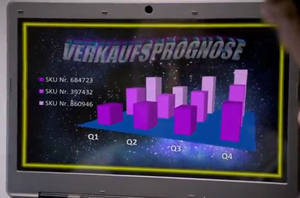 The way the bad presentation in this commercial is made even worse with animation and sound is so typical of Microsoft. And I think they try to sell this as a benefit.
It’s almost 2012! Is there still anyone out there that believes explosions and rock music improve slide presentations?
It seems to be directly out of the early Bill Gates presentation factory.
2 Quotes on Customer Experience
 Finally managed to read through the Fall 2011 issue of M/I/S/C focussing on Customer Experience.
Just 2 quotes from Will Novosedlik, VP Brand & Design Thinking at Idea Couture.
“The emotional state of the customer after an interaction with your brand is the most important moment in your brand’s life”
“Both employees and customers are viewed as costs that must be managed, not as relationships that must be nurtured”
Too often Customer Experience is considered when things go wrong not as the initial design principle.
Social Media for Business (Cluetrain Manifesto revisited)
 Google+ has now opened it’s social media and networking business for enterprises and institutions.
And a recent study by IBM (quoted by freshnetworks) indicated that 68% of CMOs are underprepared for social media marketing.
Maybe it is time to revisit the Cluetrain Manifesto of 1999 and just consider the 2 first points:
- Markets are conversations.
- Markets consist of human beings, not demographic sectors.
Social media is not just a different channel, but requires a different thinking to engage with customers. The approach to automate and mechanise customer interaction via web-sites in order to save costs, might be exactly the wrong approach in times of conversations.
Companies engaging with customers via real people e.g. on Twitter might have understood it already.
Microsoft Metro
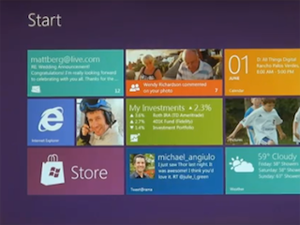 I finally managed to get myself to watch some of the Windows 8 / Metro keynotes from Microsoft’s build conference. Especially Jensen Harris’ (Director of Program Management Windows User Experience) intro to “8 traits of great Metro style apps“.
And I have to say I’m very impressed. This did not look and feel like Microsoft at all, starting with the clean slides (still a lot of text in some, but significantly better than previous ones).
There are 2 things that stick out especially and make it interesting:
The Design:
Well, for me it just looks beautiful. Great color schemes, great font. But I know that design is not only about the look. Also impressive was the obvious effort they spent in really designing the UI consistently and very well thought through. “Fast and Fluid” seems to be a great core paradigm for the whole design and at least what you can see in the video proves they have managed to take it a long way.
The Strategy:
Their push for the same UI across all platforms from phone to desktop PC makes a lot of sense, because this potentially creates a big market for app developers based on the PC market share. This will then help to move into tablets and phones with a large number of – hopefully unique – apps.
Whether Microsoft will be able to push this through is still to be seen, but if they deliver according to what they have shown, this is definitely a strong competitor for
the phone/tablet/PC OS market.
Product Decision Criteria #1: Make the best product!
At Hypercritical podcast (episode #32) John Siracusa and Dan Benjamin discuss product decisions at Apple.
The #1 product decision criteria at the board room (or any executive level) should be: “Make the best product” (for the customer)
How often are the discussions focussing around gaining market share, fighting the competition, technology trends and how much can be afforded. This will all follow once the focus is on creating the best product.
And how many companies and products in the market today would pass this test?
WAC push with Tizen
 The launch of Tizen (collecting the remains of MeeGo and LiMo) explicitely mentions the Wholesale Applications Community (WAC) APIs as one element of the solution. The other one mentioned was HTML5.
Could this give WAC another push besides the Apple, Amazon, Android application stores and ecosystems ?
I’m still very skeptical concerning the WAC approach, considering all the other telco consortium / standardization attempts in the past. The main backers of WAC in Asia NTT Docomo, SK Telecom obviously have a very specific market environment to adopt this.
7 Disruptive Innovations
Great infographics on 7 disruptive innovations.